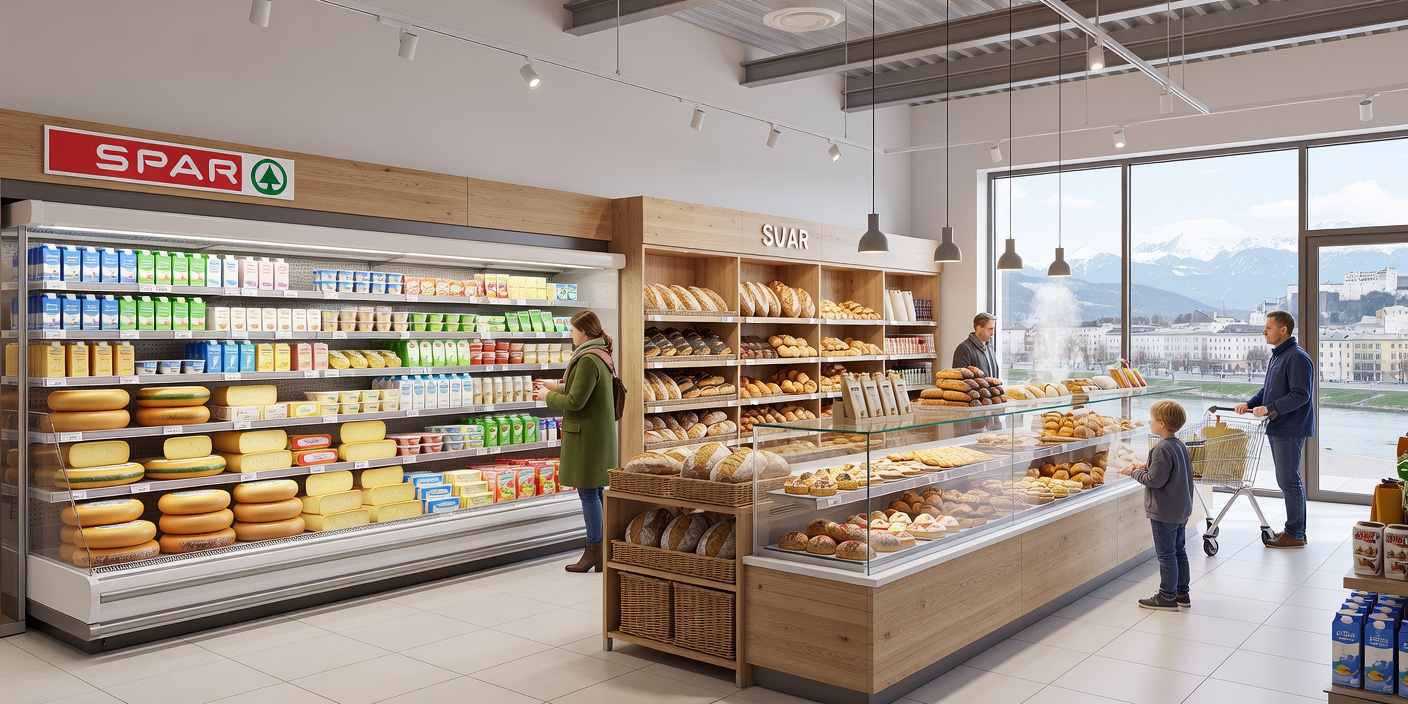
Country Network Structure: From Vienna to Tyrol
In the Austrian food retail sector, SPAR stands as one of the most prominent market operators. Headquartered in Salzburg, the organization operates a dual model consisting of company-owned stores alongside independently managed franchised supermarkets. This decentralized structure enables store directors in Vorarlberg, Tyrol, Carinthia, and Upper Austria to adapt aisle allocations to regional dining habits and agricultural calendars.
In high-density metropolises like Vienna, the retailer confronts compact floor space, high footfall, and high demand for prepared dining. Conversely, across alpine valleys such as the Pinzgau or the Zillertal, stores function as community infrastructure, stocking specialized farm products, cold-weather hardware, and extensive dry goods to support seasonal resident fluctuations.
Format Breakdown: Gourmet, Supermarket, and Interspar
Austria is notable within the international federation for executing customized formats that serve distinct purchasing contexts. The tiers operate under clearly segregated merchandising parameters:
| Format Tier | Typical Floor Area | Core Setting | Primary Product Emphasis |
|---|---|---|---|
| SPAR Gourmet | 400 – 900 m² | Affluent city centers (Vienna, Graz) | Fine wines, delicatessen, imported cheeses, artisan bakery goods. |
| SPAR Supermarkt | 600 – 1,200 m² | Residential neighborhoods, small towns | Daily groceries, local butchery, seasonal regional fruits and vegetables. |
| EUROSPAR | 1,200 – 2,500 m² | Suburban commercial corridors | Weekly household pantry items, expanded fresh counters, baby and wellness goods. |
| INTERSPAR | 2,500 – 5,000+ m² | Regional shopping malls, transit junctions | Complete grocery line, self-service restaurant, kitchenware, electronics, textiles. |
Fresh Food Ranges & Regional Sourcing
A driving competitive element of the Austrian network is localized farm sourcing. Through dedicated regional procurement offices, stores secure direct supply contracts with dairy cooperatives and fruit growers within strict geographical radii.
- Alpine Dairy & Cheeses: Sourced through partnerships with cooperative dairies across Vorarlberg and Salzburg, featuring protected designation hard cheeses (Bergkäse) aged from 6 to 18 months, raw hay-milk yogurts, and traditional butter.
- Bavarian & Alpine Charcuterie: Dedicated meat counters supplied by domestic processing units (including the proprietary TANN meat division), featuring speck, Landjäger, and traditional sausages adhering to strict AMA-Gütesiegel certification criteria.
- Styrian Pumpkin Seed Oil & Apples: Southeast regions prioritize Styrian pumpkin seed oil, locally harvested apples, and seasonal asparagus during spring harvests.
- Artisanal Bakery Deliveries: Rather than relying entirely on centralized par-baked loaves, suburban and rural branches frequently contract independent bakeries within a 15-kilometer radius to deliver fresh morning bread rolls (Semmeln) and sourdough batards twice daily.
Operational Pros and Trade-offs
Operational Advantages
- High brand trust and deep penetration in both metropolitan and rural alpine areas.
- SPAR Gourmet format commands high margins on specialty food and wine.
- Integrated in-house processing facilities reduce reliance on volatile third-party meat packers.
Logistical Challenges
- Challenging winter delivery routes across alpine mountain passes require heated, high-traction fleets.
- Rigid regulatory constraints regarding retail opening hours on Sundays in Austria limit revenue capture in transit hubs.
- Premium positioning can increase price sensitivity against hard discount competitors during inflationary cycles.
Regional Distribution Centers and Hub Architecture
To sustain fresh deliveries across demanding topography, SPAR Austria operates regional distribution centers in Dornbirn, Wörgl, Marchtrenk, St. Pölten, Graz, and Maria Saal. Each facility manages temperature-controlled zones ranging from -25°C for frozen logistics to +12°C for delicate stone fruits and bananas. Automated picking systems handle thousands of stock-keeping units daily, ensuring even isolated valley branches receive fresh milk and produce within 24 hours of farm harvesting.