The Consortium Operational Model
In Italy, the SPAR brand operates under the distinct designation of DESPAR (an acronym echoing the original Dutch phrase Door Eendrachtig Samenwerken Profiteren Allen Regelmatig). Unlike unified corporate grocery conglomerates, Despar Italia functions as a structured consortium uniting multiple regional wholesale and retail companies, such as Aspiag Service in the Northeast and other independent concessionaires spanning the peninsula down to Sicily and Calabria.
This consortium framework provides a notable balance: individual regional operators retain deep, generational relationships with localized food producers, while Despar Italia centralizes brand marketing, private-label packaging standards, and nationwide supplier contract negotiations.
Store Tiers in the Italian Market
Because Italian retail zoning strictly regulates store square footage within historic urban boundaries, Despar deploys three distinct formats tailored to historic city centers versus bypass arterial roads:
| Banner Name | Typical Footprint | Target Customer Experience | Gastronomy Focus |
|---|---|---|---|
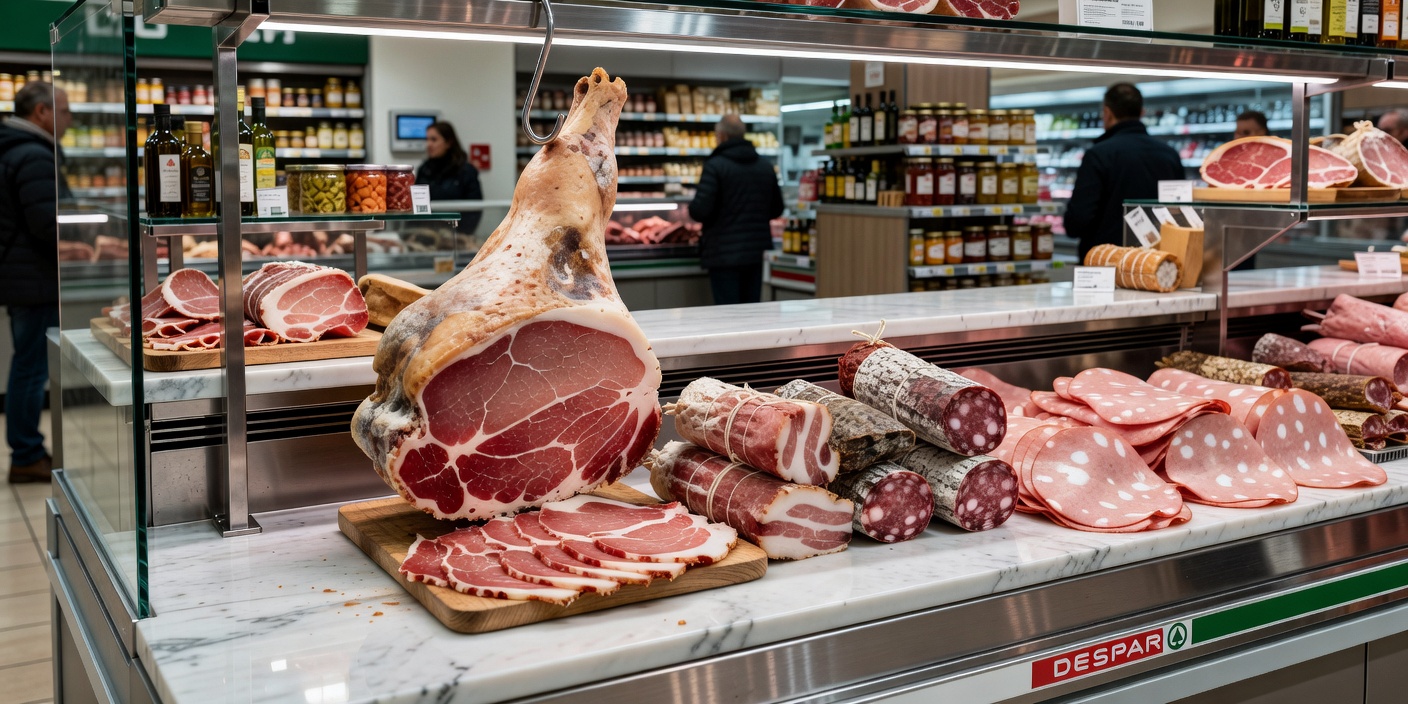
| Despar | 200 – 800 m² | Neighborhood pedestrian grocery for daily replenishment. | Service delicatessen counter (banco gastronomia), pre-sliced cured meats, fresh daily bread. |
| Eurospar | 800 – 2,000 m² | Suburban supermarket for family weekly provisions. | Extended fresh fishmonger stalls, full in-house butchery, regional olive oil assortments. |
| Interspar | 2,000 – 4,500 m² | Large freestanding retail parks and shopping centers. | Expansive wine cellar (enoteca), household kitchen goods, bulk Italian staples. |
Gastronomic Focus: Protecting Territorial Authenticity
Italian grocery shoppers exhibit high brand loyalty toward territorial specialties, making generic private labels less effective than regionally certified goods. Despar addresses this consumer behavior through specific curated private lines and supplier commitments:
- DOP and IGP Cured Charcuterie: Despar stores in the Veneto and Friuli regions showcase Prosciutto di San Daniele, Speck dell'Alto Adige, and Mortadella Bologna with authenticated geographical designations.
- Parmigiano Reggiano & Grana Padano Selection: Dairy aisles do not treat aged hard cheese as standard commodities; wheel wedges indicate aging durations (from 18 up to 36 months) along with exact cooperative caseificio origins.
- Regional Micro-Olive Oils: Extra virgin olive oils are stocked not merely by brand, but by cultivar and extraction locality—such as monocultivar oils from Puglia, Garda lakefronts, or Tuscan hillsides.
- The "Passo Dopo Passo" Transparency Program: Despar implements rigorous traceability standards for animal welfare, citrus cultivation, and antibiotic-free poultry lines throughout the Italian supply chain.
Strategic Pros and Cons of the Despar Network
Competitive Strengths
- High cultural resonance due to prominent fresh service counters (banco taglio) rather than purely pre-packaged items.
- Exceptional penetration across North-Eastern Italy, maintaining strong customer retention in tourist-dense areas.
- Flexibility of consortium members to quickly integrate artisanal micro-producers into store shelves.
Structural Challenges
- Consortium governance requires consensus between independent member groups, slowing unified digital initiatives.
- High labor intensity required to staff full-service fresh counters compared to discount competitors.
- Fragmented geographical density across parts of Central and Southern Italy relative to the Northeast.
Urban Footprints: Adapting to Historic Town Centers
Nowhere is Despar’s format adaptability more evident than in cities like Venice, Verona, and Bologna. In Venice, stores such as the restored Teatro Italia cinema branch integrate checkout lanes and grocery shelving into protected historic architecture without disrupting heritage fresco ceilings. Goods arrive via specialized canal barges rather than standard 40-tonne articulated trucks, demonstrating the network's logistical adaptability to physical geography.