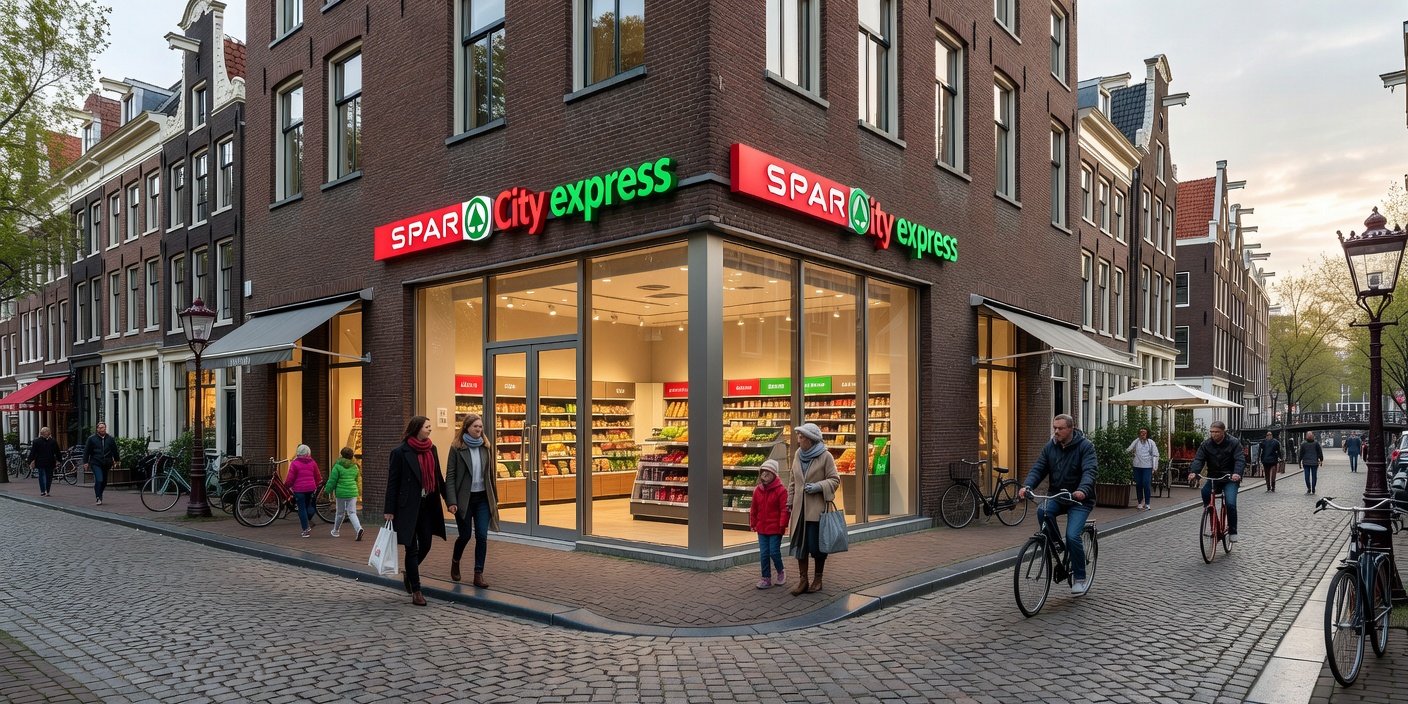
The Birthplace of Modern Independent Grocery Cooperation
In 1932, wholesale grocer Adriaan van Well established a cooperative union of independent retailers in the Netherlands under the motto De Spar ("De Spar" meaning the spruce tree in Dutch). The objective was straightforward: allow independent family shopkeepers to unite their purchasing power against emerging corporate supermarket chains while retaining individual business ownership. That single cooperative concept eventually expanded into today's global enterprise.
Within the modern Dutch market, SPAR has transformed its footprint. Rather than competing head-to-head for suburban weekly mega-trolley trips against domestic giants, SPAR Netherlands has positioned itself around convenience: urban pedestrian nodes, university campuses, petrol forecourts, and leisure vacation parks.
Strategic Format Portfolio: City, Express, and Enjoy
Dutch consumer traffic revolves heavily around cycling paths, transit interchanges, and rapid lunchtime consumption. The store network mirrors these commuter habits through targeted retail concepts:
| Format | Typical Environment | Target Footfall | Distinctive Merchandising |
|---|---|---|---|
| SPAR City | Inner cities (Amsterdam, Utrecht, Rotterdam) | Pedestrian shoppers, office workers, students | Freshly prepared sandwiches, barista coffee machines, fruit cups, compact chilled evening meals. |
| SPAR Express | Petrol stations and motorway stops | Highways, late-night transit motorists | Grab-and-go energy beverages, motor accessories, fresh baked pastries, essential pantry emergency goods. |
| SPAR Enjoy | Holiday parks and coastal campsites (Zeeland, Veluwe) | Vacationing families and tourists | Fresh morning croissants, barbecue packs, camping hardware, local regional beers. |
| SPAR University | Campus hubs and academic grounds | Students and faculty researchers | Self-checkout kiosks, budget snacks, plant-based lunch meals, quick energy products. |
Fresh Products & Dutch Food Specialties
The contemporary Dutch SPAR branch focuses on immediate consumption and regional staples tailored to local tastes:
- Dutch Bakery Culture: In-store bake-off units continuously provide hot saucijzenbroodjes (spiced sausage rolls in puff pastry), stroopwafels, and crusty bread loaves throughout morning and midday hours.
- Gouda and Edam Selections: Extensive cold-case shelves offering both young mild cheeses (jong belegen) and robust aged varieties (oud kaas), paired with regional mustards.
- Fresh Food-to-Go ("The Tosti Bar"): Custom grill counters where shoppers select artisan bread and fillings for freshly pressed toasted sandwiches, catering to the traditional Dutch lunch custom.
- Plant-Based and Organic Assortments: Given high domestic adoption rates of meat substitutes in the Randstad, Dutch stores feature extensive refrigerated sections dedicated to dairy-free milks, plant proteins, and organic ready meals.
Operational Trade-Offs in the Netherlands
Key Advantages
- Leading placement in high-density transit nodes, academic centers, and seasonal holiday resorts.
- Exceptional basket turnover and higher gross margins on prepared convenience items compared to bulk staple groceries.
- Agile automated self-checkout systems suited to rapid rush-hour customer throughput.
Strategic Hurdles
- Lower penetration in large residential family suburban trolley markets.
- High dependency on daily footfall leaves commuter stores sensitive to remote-work trends.
- Intense urban competition from alternative rapid delivery platforms and domestic retail chains.
Logistics and the Waalwijk Distribution Ecosystem
To keep hundreds of compact city-center and forecourt stores replenished without overwhelming historic pedestrian zones, SPAR Netherlands relies on centralized distribution hubs in locations like Waalwijk. Deliveries to urban Amsterdam or Utrecht use compact, zero-emission electric vehicles and split-compartment refrigerated trucks that deliver frozen goods, chilled dairy, and dry grocery batches simultaneously, reducing diesel emissions and inner-city traffic congestion.